
… or how helplessness can turn to hopefulness
Mar 30, 2026

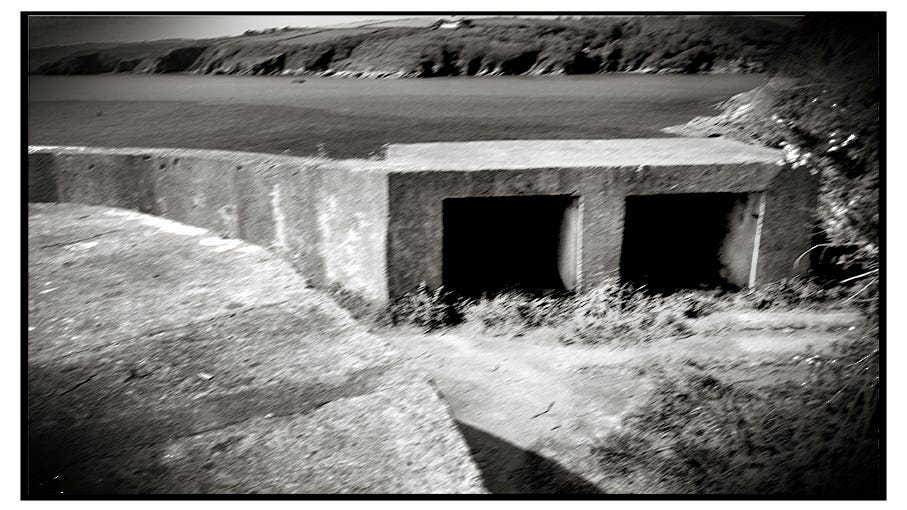
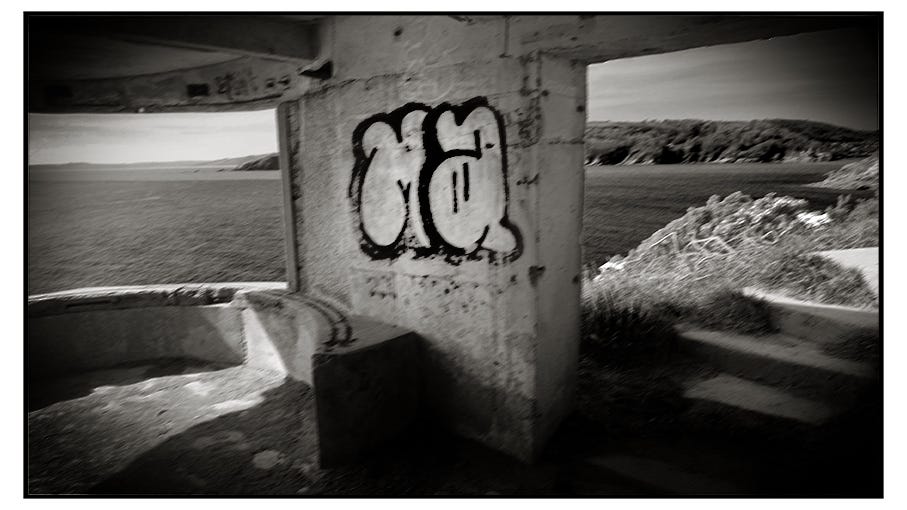
This weekend I took a walk on my favorite bit of Devon’s southern coastline. About half way between Kingswear on the Dart Estuary and Berry Head near Brixham, you come across the remains of the Brownstone Battery, a 2nd World War gun emplacement. Whilst there I got talking with a couple of other ramblers and the conversation turned unsurprisingly to current conflicts and our fears not just for the populations living through them, but also for our own children and grandchildren. The level of death and destruction, whether in the Middle East, Ukraine or the Sudan, feels unprecedented – the dread that we may be entering a new world war feels very real. We talked briefly of the lives lost by our parent’s generation during WW2 – lives lost defending a democracy that itself now feels under threat – and of the griefs that had haunted the nation, some explicitly but most unspoken. How would these coastal defences or their modern equivalent fare against the devastations of this new world order.
How many children do you have …?
At this point I could of owned up about how many children I have – one of whom has now died. But I didn’t. I’m normally not that shy about revealing news about Joshua’s death but this time I was unsure comparing the singular (not to say ordinariness) of our grief to those living through such huge catastrophes. But I also didn’t want to dilute what our imaginations and these wartime constructions were telling us about history and our inability to learn from it. Brownstone Battery had been built in 1940. Manned by up to 300 soldiers, it was one of a number of strategically placed gun batteries along Englands south coast and constructed as a defence against a German land invasion that in the end never happened. A poignant reminder of what might have been. As far as I know no one died either in the construction or the operation of this collection of military architectures … yet it played a significant role in averting the huge scale of deaths had we been overrun by the Nazis.


“…. we couldn’t protect him”
As I continued on my walk along the coastal path and towards Coleton Fishacre, (one time home of the D’Oyly Carte family now managed by the National Trust), I thought about a conversation that might have been, had I not wanted for my own solitary wanderings. Is there a lesson here for all of us who grieve for a deceased loved one? How do we find perspective and manage our own personal grief and still find time or the will to identify with so many unknown (to us) griefs that consume the airwaves. For those who have known grief for one who has died too soon, will inevitably seek out others suffering the same fate.
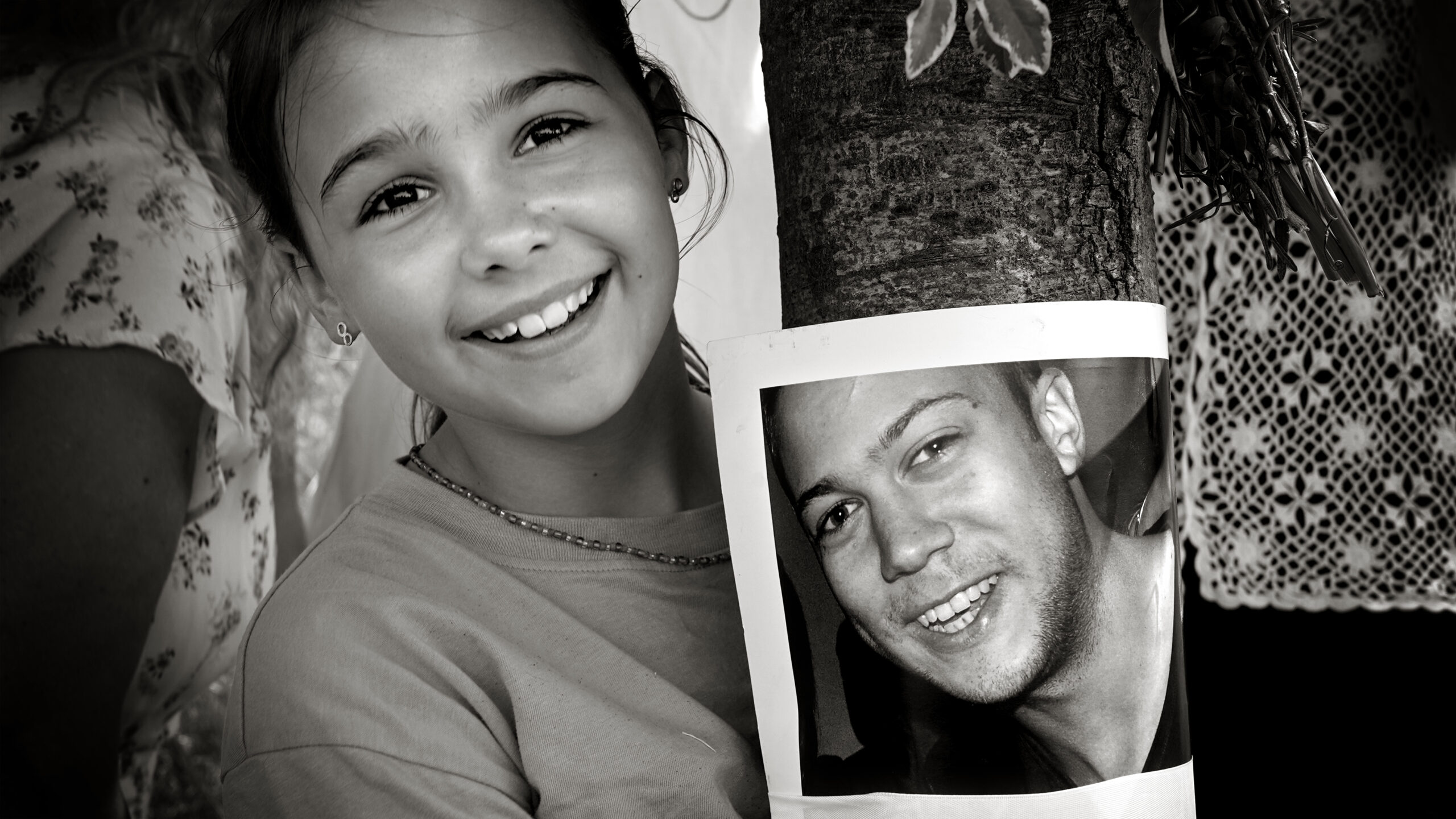
Our son Josh died suddenly in a road accident in Vietnam 15 years ago. He didn’t die at another’s hand, starve to death through impoverishment, or become a casualty of war or famine. He was 22, an independent and confident adult, but still, we couldn’t avoid the sense of guilt and responsibility common to many bereaved parents, that somehow we hadn’t protected him, we couldn’t protect him, from such a fateful and fatal accident. …. and now as our forever news feeds bombard us with more and more accounts of death and destruction, this time occasioned by a seemingly messianic cult that cares not for anything that it claims … justice, freedom, democracy … we are again left with a feeling of complete helplessness.


Blue. blue windows behind the stars,
Yellow moon on the rise,
Big birds flying across the sky,
Leave us
(Helpless, helpless, helpless, helpless) helpless, helpless, helpless
(Helpless, helpless, helpless, helpless) babe, can you hear me now
(Helpless, helpless, helpless, helpless) …..
(Neil Young 1970)
Statistics, statistics …
I think it was Stalin that proclaimed that one death is a tragedy, a million deaths is a statistic. What seems like a callous excuse for a murderous dictator (chances are he probably never actually said it – more likely attributed to him ….) it nevertheless speaks to a common response to do with what is known as the ‘identifiable victim effect’. It’s been found that compassion fades as the number of victims increases and eventually disappears altogether. At the same time the distance between us and the news of the latest outrage – in this case the start of the US/Israeli onslaught on Iran and the bombing of a school in Minab with over 170 dead (and by the time reality has been filtered through so many layers of media it is just ‘news’) doesn’t mitigate against this horrendous feeling of HELPLESSNESS. How is it possible to feel compassion for so many we can’t know as individuals … the result is anger, frustration arising possibly from a personal sense of failure and impotence … our emotions have no place to land.
Our grief feels doubly helpless …
Is there some learnings here? Can our own experience of grief shed light on what do about this helplessness? A personal grief, we know, cannot be fixed. There’s nothing you can do to bring our son back to life, and there’s nothing you can do to change the reality of our loss. You can’t help us like that. That’s OK. It might distress you to see our pain, but please don’t try to alleviate it to lessen yours. Please don’t interfere with our process. What is needed is simply a friend that can sit beside us, quietly, wordlessly and fearlessly. You need to remain helpless. Yes, it’s hard, we know that – the instinct to help, to mend, to make things better is hard to overcome.
Still, we who grieve also experience that same sense of powerlessness when it comes to a wider grief, and that we should still want to do something about it. As we enter another period (remember COVID!) of universal uncertainties, our grief feels doubly helpless. We feel aggrieved by circumstances beyond our control … yes, aggrieved, a word that contains within it both a sense of injustice and a call for reparation. In common usage ‘to be aggrieved’ carries with it a suggestion of some fanciful resentment, a possible antipathy, even hatred of another, which once seen as offensive can then be discounted and marked down as anti-social. No wonder that those who grieve can sometimes find themselves on the wrong end of social intercourse.

Grief and grievance …
I’m going to digress here … just a little bit – to try and understand the way our grief ‘works’ … and how just possibly it can shed light on this sense of impotence, how it can lead to that sense of grievance and what we can do about it … how it can transform a helplessness into a hopefulness. Firstly, let’s consider the linguistic roots of both grief and grievance …. which the astute among you will have recognised their etymological pedigree- how the one arises from loss and the other in that call for justice.
We should note that ‘to grieve’ comes into English usage sometime in the 13th century. It’s from the Old French verb grever meaning to burden – it’s a transitive verb, ie to load or be loaded by a weight of some kind. As we have found, grieving the loss of a loved one is one of the most basic burdens a human can bear. But to burden also meant being an irritant, bothersome, even harmful. It’s an indication of the way language develops in tune with its ideological masters that the French word gréve has also come to mean ‘a strike’, as in the withdrawal of labour, a strategy that arises from a grievance (grevance in French) with an appeal for reparation, for justice. Of course, not all losses can be alleviated by a call to justice, (Josh’s death a case in point) but if to grieve is to mourn it is also to petition – grievance is grief given a voice.
A small cog ….
Earlier this month I drove a second hand ambulance from my home town (village really) of Stoke Gabriel in Devon to Wroclaw in Poland. I was one of a team of volunteers who have now delivered close to 100 hundred vehicles of various shapes and sizes but mostly 4×4 pickups, to help the Ukrainians fight their war against the Russian occupation. The trucks are packed with generators, medical aid and equipment, all sourced and paid for by local residents, and then after we have handed them over in Poland, are delivered to medical teams, rescue organisations and rehabilitation centres throughout Ukraine. I am a small cog in a now well oiled machine that has established a practical response and an emotional solidarity to a nation full of grief …. and grievance. And it feels good. What at one time felt depressingly helpless, now has a banner of hope waving in the wind.
I can’t change the world but perhaps I can change your world.
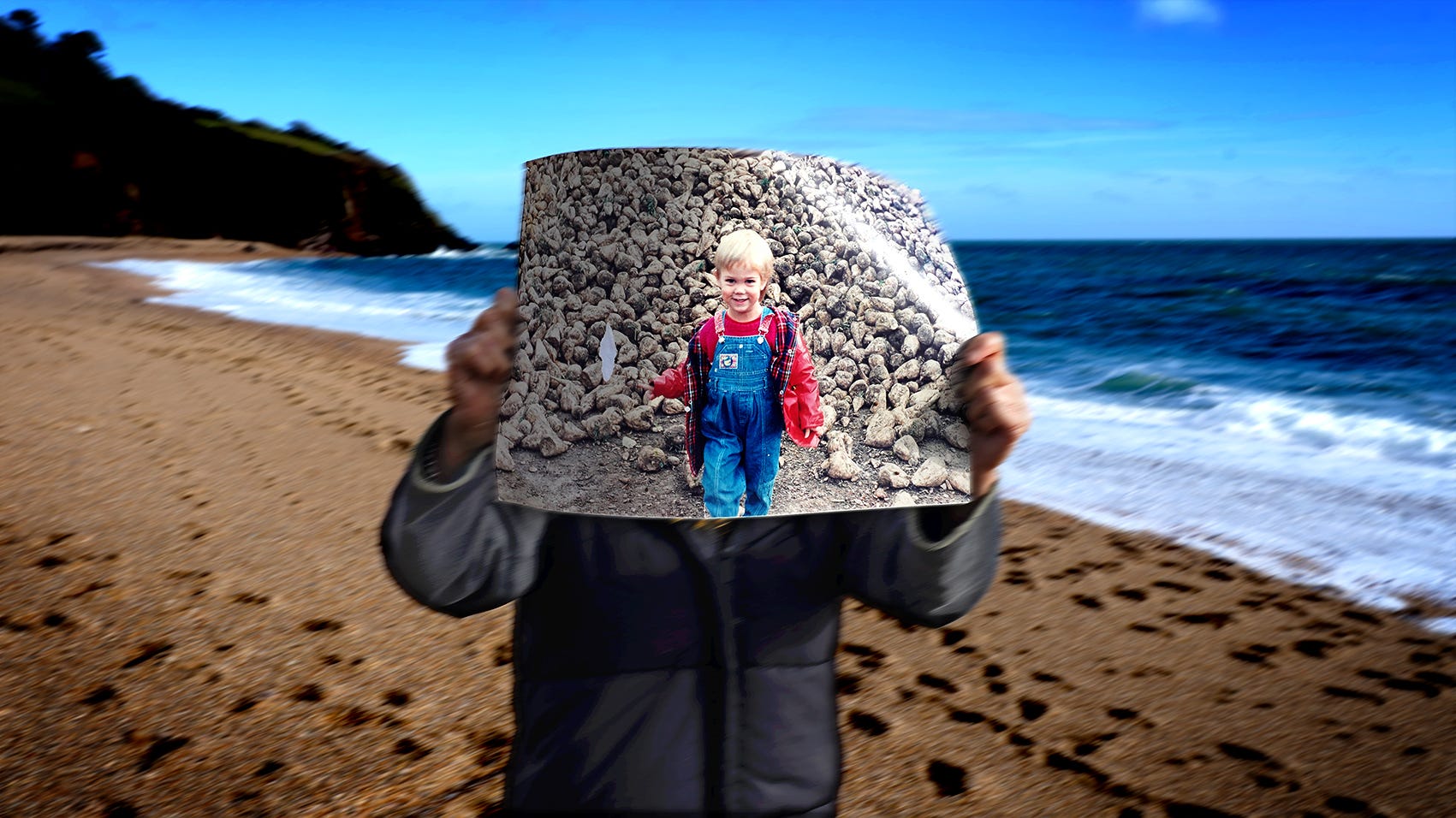
There was a time in the first weeks and months after Joshua died, that weight of my grief prevented me from engaging with any other … I didn’t want to hear about anyone else’s grief consumed as I was by the fear that his death would soon become lost to the anonymity of all the worlds dead. I guess this must be true for all bereaved parents in the early stages of their grief. In time, though, and as the years have passed I have that the burden of grief has become lighter the moment I have engaged with a wider grief, sharing my feelings and learning from others (see our ACTIVE GRIEF WEEKEND retreats).
We are now living in times of heightened anxieties. There are disquiet and real fears and apprehensions about our futures. Driving to Poland was reminder that however small or seemingly insignificant an action, there is purpose and healing in aligning oneself with a more wide ranging call for justice. A shared grief inevitably leads us to a greater empathy and a more assured connection to the struggle for a just and more equitable world.
I picked you from many others
storm tossed and beached
veined in my heart
singular and hardly missed
hidden now in pockets of grief
warmed away from
those left behind
sharing unknown unknowns
I can’t change the world
but perhaps I can
change your world.
Thanks for reading
Jimmy (March 2026)
(all photos by JIMMY)
At THE GOOD GRIEF PROJECT we welcome a diversity of opinion on all things to do with DEATH, DYING AND BEREAVEMENT and of course GRIEF …
Why not join us and contribute your thoughts and ideas by submitting your own article. SEND YOUR DRAFT TO info@thegoodgriefproject.co.uk
THIS ARTICLE WRITTEN BY JIMMY EDMONDS
Copyright © 2025 THE GOOD GRIEF PROJECT, All rights reserved.
The Good Grief Project – registered UK charity number 1170244