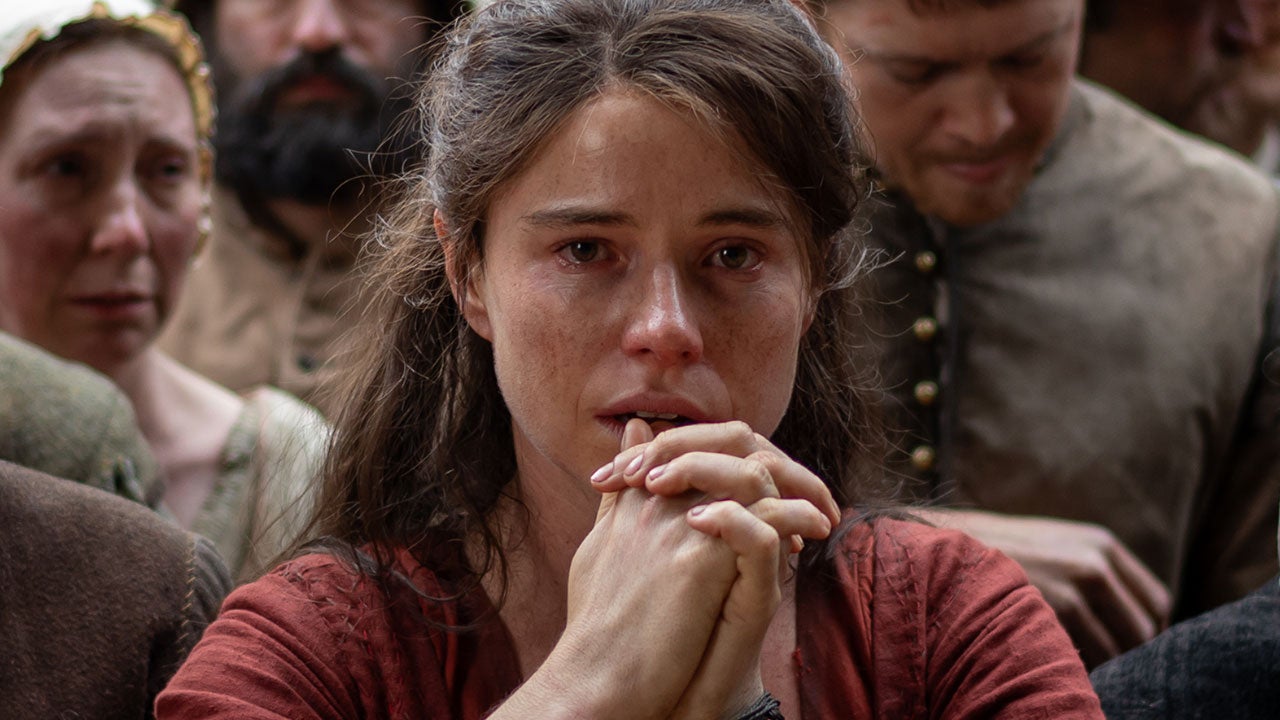
Mixed views and divided opinions on Chloe Zhao’s film about grief
Have you seen Hamnet? We have and would like to open a discussion about what the film could mean for bereaved parents and siblings and for their allies.
As far as the critics go and from what we have learnt from our own friends and community, Hamnet has divided opinion and we’re going to wrestle our way through these opinions by asking two fundamental questions :
- Does the film give us an accurate portrayal of parental grief?
- Does it help us (ie both the bereaved and the non bereaved) to better understand grief and bereavement both in our relations to one another and in society at large. Subscribe for free to receive new posts and support our work.
A love story, creaking at the seams …
Hamnet, the film is directed by Chloe Zhao from the novel by Maggie O‘Farrell. It’s a work of fiction but inspired by the life and death of the son of one of our most famous playwrights – Hamnet is the boy whose story has been all but forgotten, but whose name was given to one of the most celebrated plays ever written.
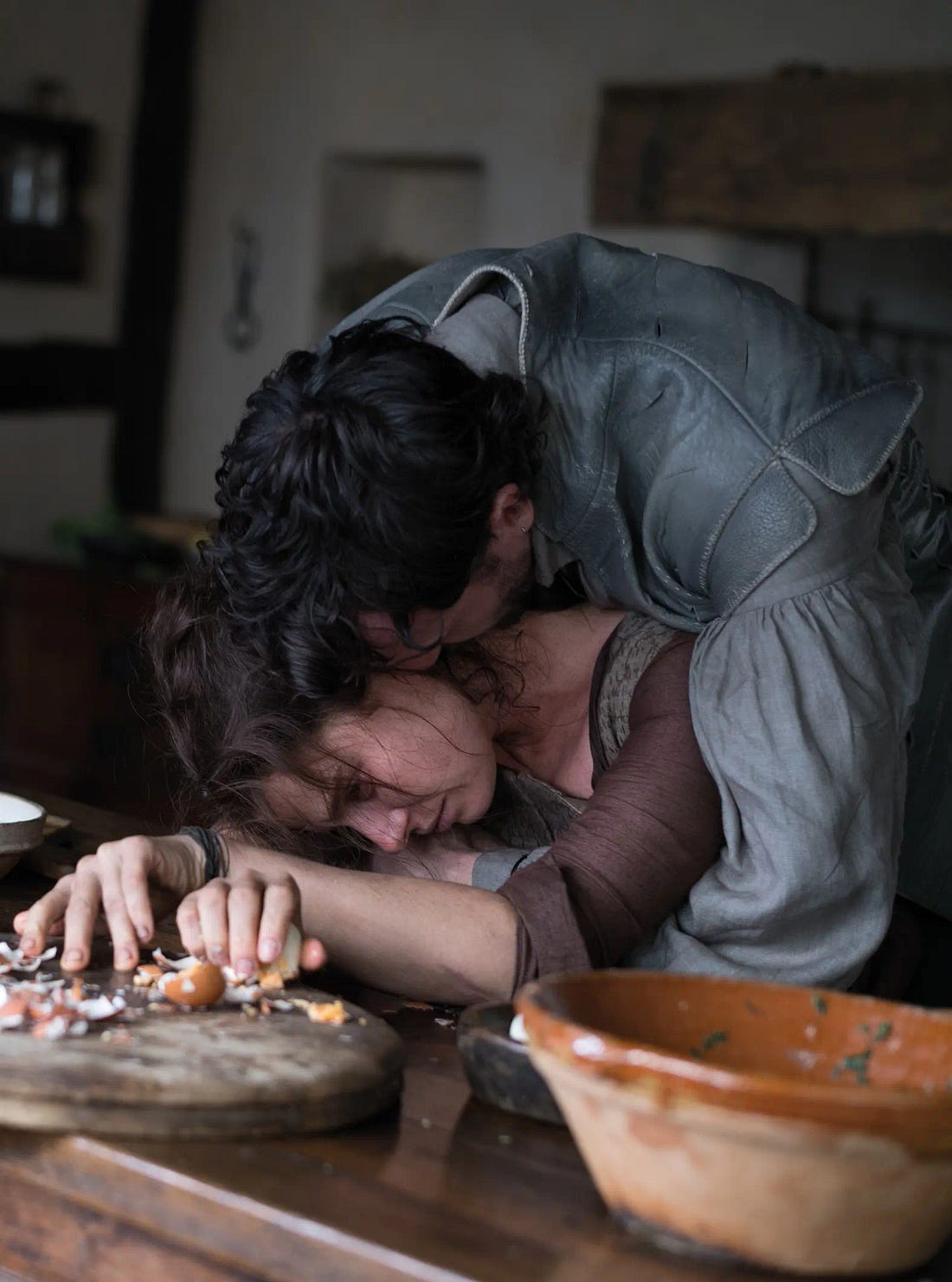
Central to the telling of the story is the relationship between his mother, Agnes and her husband (the playwright – he is not named in the book!). It’s a love story creaking at the seams made more difficult when their son, Hamnet, dies from the plague at the tender age of 11. As bereaved parents ourselves we were drawn to the story given that the experience of parental and/or sibling grief is so rarely portrayed in cinema. Death of course is a constant visitor to our screens, both large and small, but its aftermath and the impact on the survivors are more often held at a distance. From memory, Manchester by Sea (2016) comes closest in the way it explores how a depressed uncle (Casey Affleck) handles the fallout after his brother dies in a house fire. So to go and see what has proved to be a very popular film about two parents grappling with the sudden death of one of their children was an event we wouldn’t want to miss.
Grief is so elusive …
In a recent BBC interview Zhao (who wrote the screenplay together with Maggie O’Farrell) offers an insight to her own motivation to make the film :
“When we talk about grief, we try to rationalise it, we try to dissect it, to give it meaning with words. It’s helpful to a certain extent but ultimately one has to feel it. … so how do you get the audience to feel instead of to think about it .. not only the characters grief and love but their own …. for me its about trying to capture something that you can’t quite grasp”
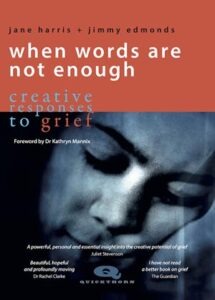
Trying to capture something that you can’t quite grasp … absolutely. Grief is so elusive. You cannot pin grief down. To find the words to describe how grief feels has been the failed mission of artists and thinkers down the centuries . For us, supposedly bereaved by the worst loss imaginable, defining grief has proved an equally challenging task. Our best attempt is When Words are not Enough published in 2022.
To answer the first of our questions … has Zhao succeeded in her portrayal of parental grief? We ask this because we feel that to understand and to know grief in its entirety (ie viscerally, emotionally and intellectually), it’s necessary to open one’s heart to a greater empathy, a great compassion and a greater humanity in a way that only the bereaved think they can claim. Is this the case?
For those of us who have suffered the death of a child of any age (even an adult child), there is a feeling of exclusion from the rest of society, an isolation we believe that stems from a sense of fear and helplessness by those who would perhaps want to stand with us but hesitant about ‘saying the wrong thing’ – of being afraid of creating more upset. We have experienced this, especially in the early years of our grief, a sudden change in the conversation at the mention of our dead son Joshua, an awkward silence or pitying look, a moment of acute embarrassment that stifles any sense of connection and have led to some difficulties (even breakdowns) in our relationships with both friends and family.
The thing is and what 15 years of bereavement has taught us, is that grief does not sit on individual shoulders, it’s a relational thing. We are changed by grief. The trauma of Josh losing his life and of us not knowing where he has gone to – of where he is now – produced an existential transformation in our own identities – in our own sense of our selves and in our relationships with others. This is truly difficult for us to explain and, it seems, for those who have not been so bereaved, to understand.
So un-neat and messy …
Our hope is that films like Hamnet can help. Our hope is that Hamnet can open up conversations about the grief that follows the death of a child, that it shows how complex grief is (how un-neat and messy it is), how mothers and fathers (and brothers and sisters) will grieve differently, how we are transformed and reformed by grief and ultimately how we can learn to talk about and therefore empathise with the bereaved more confidently. Would Zhao’s film reveal something about grief that we could actually grasp?
Jane and I saw Hamnet in our local independent cinema in Totnes, South Devon. The Totnes Cinema is a lovely intimate space – more like a cafe/bar with a huge screen – it has a maximum seating capacity of just 146. The house was packed. Somebody said bring tissues. Whether tears are an effective marker of a ‘good’ film maybe a mute point but I (Jimmy) felt a certain anxiety, ambivalence even, as we entered the cinema. Would I, a bereaved father, also be counted among those “cold hearted cynics lacking enough love in their hearts” who would disassociate from its intended emotional impact and instead find fault in its creative endeavour?
Julia Samuel (psychotherapist and author of “Grief Works”) suggests that the film gives us permission to “feel without explaining” to “stay with sorrow without fixing it” and to “imagine the unimaginable in the company of others, held by a story that doesn’t look away”. “Hamnet does not allow us the refuge of distance” she posits, but “the beauty of the filming and the brilliance of the performances enables us to stay with what otherwise would break us”
Broken time and a new sense of difference…
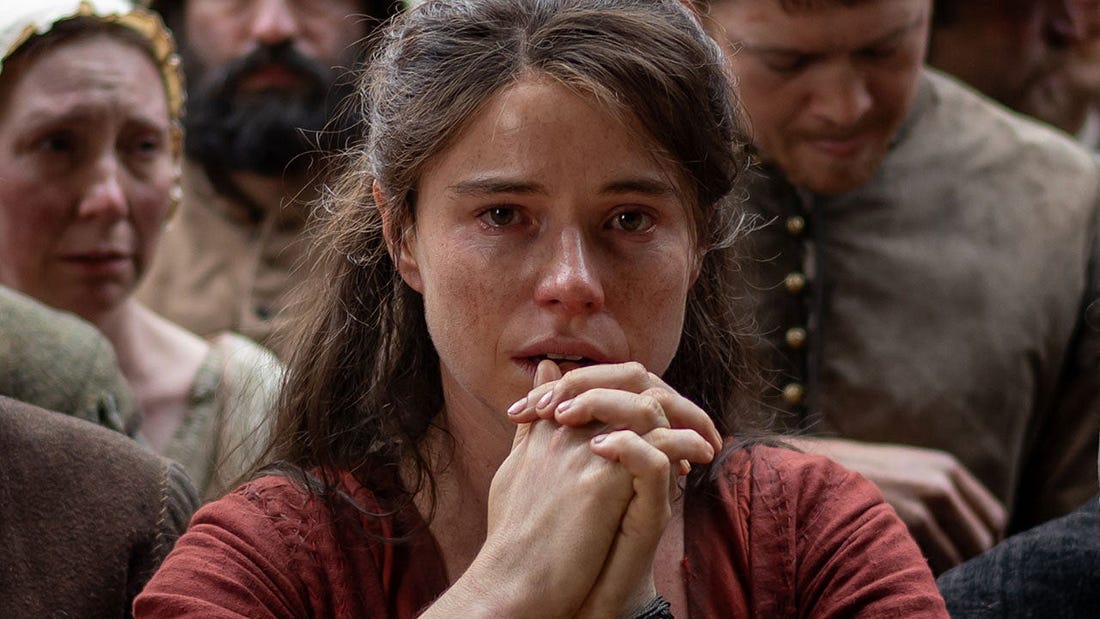
I tried … honestly I did try. I was prepared to lose myself in what have been lauded as stella performances from Jessie Buckley (who plays Agnes) and Paul Mescal (the playwrite). But something was preventing me from getting through, both on an emotional level, and to the actuality of the story. I’d also recently read the book and the film departs from O’Farrell’s narrative in a number of significant ways. If you haven’t engaged in either, then suffice it to say that the complexity of grief in O’Farrell’s telling has, in the film, been reduced to a simple traumatic pain … one that it would be churlish to ignore but which fails to illicit any sense of that ‘changed self’ or the grievers difficulty in finding themselves again and their place in the world. The book’s non-chronological structure helps to convey that sense of broken time – not so the film.
When it comes to that new sense of difference that most bereaved parents experience, the film never properly establishes the couples status within their community, making it difficult to explore that sea of isolation many will feel. We never see Agnes ‘at work’ so to speak, answering to all the health issues that arrive at her door and delivering the natural remedies and potions that in the end she feels fail her when trying to save her son. And it’s this failure and the guilt that comes with it – the guilt that constitutes so much of her grief (we all know about the ‘what if’s) – that is left unresolved.
Other reviewers have likened Hamnet the film to “a blunt spade designed to whack you over the head until you weep from the pain”. I’m not sure I’d go that far but the director has clearly made important choices and for me, significant omissions from O’Farrell’s book. First off would be the impact of both parents grief as it manifests in their immediate community …the husband, O’Farrell writes “feels as though he is caught in a web of absence, its strings and tendrils ready to stick and cling to him whichever way he turns”. Agnes “knows better than to look out of the window as the hour school begins… She will not go out at this time … Some days, the streets are full of Hamnets. They walk about. They jump and run. They jostle each other. They walk towards her, they walk away from her, they disappear round corners”. She finds that “people don’t always know what to say to a woman whose child has died. That some will cross the street to avoid her…” (Every bereaved parent will have experienced this at some point). So Agnes stays indoors where she “cannot see the point of sweeping the floor” and not knowing what to do with his clothes – “… for weeks, Agnes cannot move them from the chair where he left them before taking to bed”. Not exactly dramatic stuff this grief that is so empty, so full of nothingness, but in more imaginative hands one feels the film could have allowed us to encounter a better, more substantive sense of how complicated grief can be. Hamnet the film is a plain film – visually it is exquisite, beautifully composed but lacking edge, the performances are intense but leave no room for doubt, and Max Richter’s score seems designed to impose empathy rather than experience wonder.
An imaginative project …
Imagining, is what grief is all about. We have ourselves discovered that grief is almost by definition an imaginative project, a creative process. One of constantly trying to fill the void left by the loved one’s absence … for us it’s a continual and on going process of doing and making new things that maintain our relationship with our son, things that would and could not have existed had he not died.
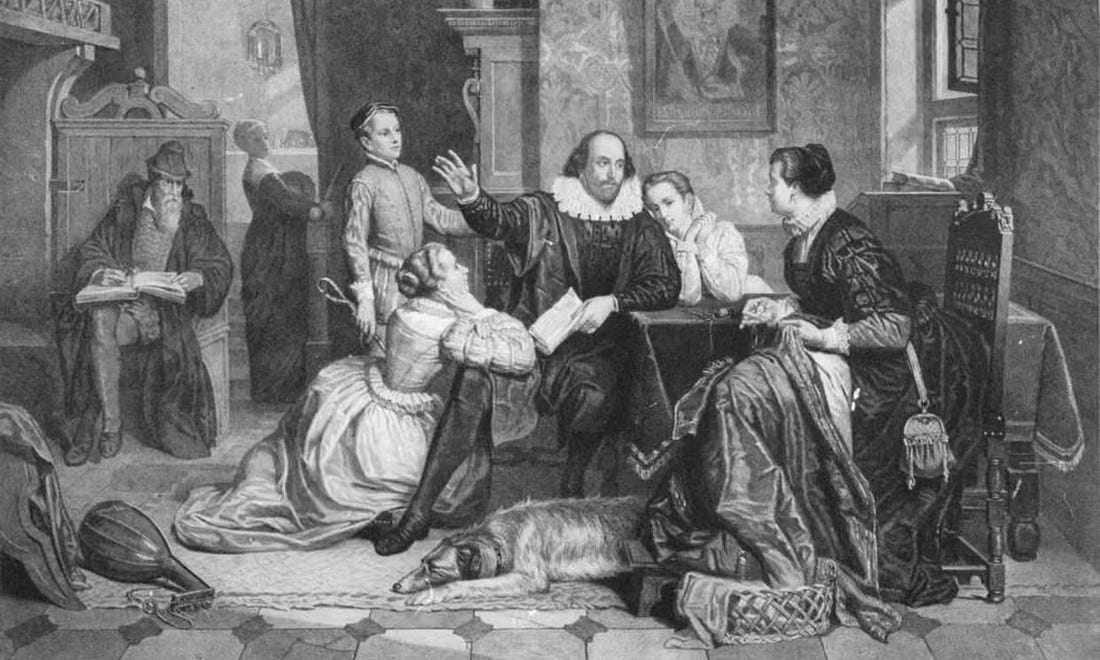
We won’t be the first to observe that within this narrative it’s the husband/father who pursues this objective. The conceit of both book and film is that Hamlet is Hamnet, yet its left to Agnes to follow her husband to London (three days on horseback with a final frantic search through the plague ridden London streets, though you wouldn’t know this from the film) to witness what he has created to fill the void in their lives. While more accurate to the book, the film spends more time (much more time) on the staging of the play than does the book. For obvious commercial reasons (this ‘cynic’ would say) but it does seem to leave the mother dependent on another to help her process her grief. Her own creativity takes second place.
Now to answer the second question. Does Hamnet help us understand grief better? I think we’ve gone some way to answering that already.
For Julia Samuel, “… the question Hamnet leaves us with is not only about grief, but how we meet one another. Do we reach for distance when pain appears, or are we willing, sometimes, to imagine anyway? And what might change if we allowed ourselves, more often, to stay with what is unbearable, rather than turning away?”
It’s not enough to be moved to tears, and those who have found the film to be emotionally over manipulative do have a point. What is needed is a more nuanced portrayal of grief, leaving room for a curiosity that may well be scarey but at least genuine. Grief is frightening, but neither does it offer easy answers. The one thing that Zhao can claim about her film is that despite the best intentions, Hamnet leaves those who would want to ‘stay with the pain’ still none the wiser. Her task of ‘capturing grief’ remains as elusive as ever.
Jane (Josh’s Mum) loved the film, with reservation. Whether as a bereaved mum she learnt anything new was irrelevant. Love it or hate it, if it helps people be less afraid to talk about our dead children then that’s a good thing.
When we left the cinema that night, it was absolutely tipping down. Heaven wasn’t just weeping, it was bawling and we got soaked. Difficult then to assess how many tears had been shed as a result of this particular screening or how many had fostered another kind of engagement with grief – one that was less fearful, more present, more prepared to stay with the unimaginable.
Thanks for reading
Jimmy (Josh’s Dad)
Next on our list is ‘H is for Hawk’ – the film adaptation of Helen Macdonalds book that tells the story of how she dealt with her father’s sudden death by training a goshawk – both as a distraction and as a way of navigating her way through her grief.